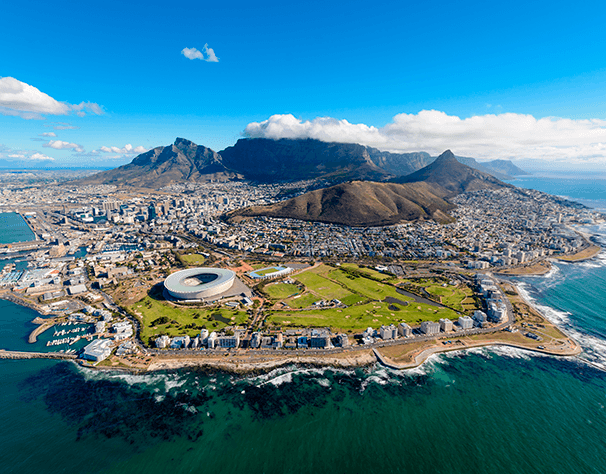
Cape Town rewards travelers who move at the rhythm of its landscapes. The city sits between the Atlantic Ocean, Table Mountain, vineyards, surf suburbs, and old harbor districts, creating a rare blend of outdoor living and layered history. A standard visit might include the waterfront and mountain views, but Car rental in Cape Town turns the stay into an immersive journey where the traveler can follow coastal light, wine valleys, and mountain passes without rushing.
The city’s identity is multicultural and proudly local. English, Afrikaans, and Xhosa are commonly heard in daily life, while food markets, art spaces, jazz venues, and neighborhood cafés reflect a long exchange of African, European, and Asian influences. The driving culture mirrors that mix: friendly and practical, with rental counter staff often sharing route tips, parking advice, and realistic timing for popular drives.
Cape Town also has a strong nature-first lifestyle. Residents plan weekends around hikes, surf breaks, beach picnics, and wine estates, and visitors quickly notice that many of the best experiences sit outside the dense city core. A rental car makes it easier to shift from sunrise at Muizenberg to lunch in Constantia, then sunset on Signal Hill, with a jacket, camera gear, beach towels, and purchases safely stored in the trunk.
The city’s history also becomes more accessible by road. From the old streets near the Company’s Garden to the Cape Peninsula communities, every route reveals how geography shaped trade, defense, migration, and modern tourism. Rest assured, a carefully planned rental car trip does not replace local culture; it opens more space for it, especially when travelers move slowly, park responsibly, and choose routes that support neighborhoods, vineyards, and coastal villages.
Why renting a car unlocks the Cape Town experience
Cape Town has useful public transport and ride services in selected areas, but the region is spread out, and many signature experiences are not clustered together. The airport, city bowl, Atlantic Seaboard, southern suburbs, Winelands, and Cape Peninsula all sit on different corridors. A rental car solves the main logistical challenge: it gives travelers control over pick-up, beach stops, luggage, family needs, and the return time without depending on limited route coverage or peak-hour availability.
The greatest advantage is flexibility. Scenic roads can become part of the itinerary rather than simple transfers, especially when clouds clear around Table Mountain or whale sightings are reported along the coast. Current travel patterns show strong demand for SUVs, wagons, and longer rentals, particularly during summer, school holidays, wine events, and whale season. Booking early helps secure the right category, while airport locations usually offer the broadest fleet and longer operating hours.
Memorable drives and day trips from Cape Town
Cape Peninsula Loop and Chapman’s Peak
The Cape Peninsula Loop is one of South Africa’s classic self-drive routes, covering roughly 110 km round trip and usually taking 4 to 6 hours with relaxed stops. From central Cape Town, travelers can drive past Camps Bay and Hout Bay, continue along Chapman’s Peak, and head toward Cape Point. The route suits couples, families, photographers, and first-time visitors who want the city’s most dramatic ocean-and-cliff scenery.
Chapman’s Peak is a controlled toll road, and closures can occur when weather or rockfall risk affects safety. Parking is available at viewpoints, beaches, and Cape Point, but popular bays fill quickly during holidays. A compact car handles the route well, while an SUV gives extra comfort for families carrying a car seat, picnic gear, and beach equipment. A GPS is useful, though signs are generally clear on the main coastal roads.
Stellenbosch and Franschhoek Wine Route
Stellenbosch lies about 50 km from Cape Town, usually 40 to 60 minutes by car depending on traffic, while Franschhoek is another 25 km, around 25 to 35 minutes farther. This route is ideal for food-focused travelers, couples, and small groups seeking Cape Dutch architecture, mountain views, cellar-door restaurants, and manicured vineyard estates.
Driving allows a more personal wine-country day, with time for breakfast in Stellenbosch, a scenic pass toward Franschhoek, and a late-afternoon return before city congestion builds. Estate parking is generally straightforward, but reservations help during weekends and harvest events. The N1 freeway is efficient, though weekday peaks near Cape Town can slow the first and last part of the journey.
Hermanus Whale-Watching Coastal Drive
Hermanus is around 120 to 140 km one way, typically 1.5 to 2 hours by car. The direct route follows the N2 highway, while travelers with more time often choose the coastal approach through Gordon’s Bay and Betty’s Bay for dramatic ocean views. The trip is especially rewarding for whale watching, coastal walks, seafood lunches, and overnight stays.
A rental car is valuable here because whale activity, weather, and viewpoints can change throughout the day. Secure parking is available near central Hermanus, cliff paths, and harbor areas, but travelers should avoid leaving bags visible through the windshield or side windows. This drive suits families and nature lovers, and it can also work as a first segment toward the Garden Route, as provincial travel within South Africa is commonly supported by rental agreements when the route is declared if required.
West Coast National Park and Langebaan
Langebaan and West Coast National Park sit about 120 km from Cape Town, usually 1.5 to 2 hours by car. The route north is open and relaxed, with lagoon scenery, birdlife, beaches, and seasonal wildflowers. It is a strong choice for travelers who prefer wide horizons, quieter roads, and a full-day escape from the city.
A car is especially useful inside and around the park because viewpoints, picnic areas, and beaches are spread out. Parking is simple at most stops, but travelers should keep valuables hidden and secure the vehicle even in peaceful areas. A compact or midsize category is enough for standard paved routes, while an SUV adds comfort for longer drives and extra luggage.
Cederberg and Clanwilliam Adventure Route
The Cederberg region is roughly 250 km from Cape Town, with typical driving times of 3 to 4 hours before local detours. This is a better fit for multi-day travelers, hikers, climbers, and visitors interested in rock formations, wilderness lodges, and ancient rock art. Roads become more remote, and some sections can be gravel, narrow, or uneven.
For this route, vehicle choice matters more than in the city. A high-clearance SUV is often the practical minimum, while a 4x4 category may be preferred for deeper rural access, especially after rain or when lodging is reached by rough tracks. Travelers should plan gas stops, daylight arrivals, and route timing carefully, as remote areas have fewer services and mobile coverage can be inconsistent.
Choosing the ideal vehicle category for Cape Town
Vehicle category should match the itinerary rather than only the daily price. Economy and compact categories work well for solo travelers, couples, and city-focused stays around the waterfront, beaches, museums, and restaurants. They are easier to park in the CBD, Sea Point, Camps Bay, and Muizenberg, and they keep gas costs manageable when most driving remains on paved urban roads.
For families, wine routes, and longer coastal days, midsize, wagon, and SUV categories provide better seating comfort, luggage space, and visibility. Premium and luxury categories suit business travelers or special occasions, especially for airport transfers and formal meetings. 4x4 and high-clearance categories are best reserved for Cederberg-style adventure routes, rural farm stays, or itineraries where gravel roads and uneven surfaces are part of the plan.
Practical driving guide: rules, parking, and safety
Cape Town follows South African road rules, with traffic driving on the left. Seat belts are required, mobile phone use must be hands-free, and children must travel in the appropriate car seat. The traveler should carry a valid driver’s license while driving, as checkpoints and speed enforcement are common. Major roads are generally well maintained, but rush-hour congestion affects the N1, N2, M3, airport approaches, and the city center.
Parking is manageable but needs attention. The CBD, V&A Waterfront, Camps Bay, Table Mountain access roads, and beach areas use a mix of paid street parking, managed attendants, hotel parking, and private garages. Cape Town does not operate a citywide low-emission access zone, but loading bays, bus lanes, tow-away signs, and time-limited spaces are enforced. For safety, the best practice is to park in visible or secured areas, lock doors, keep windows up, leave nothing on seats, and avoid stopping in unfamiliar high-risk areas after dark. Before leaving the rental location, travelers should inspect tires, lights, fuel level, and windshield condition so the return process stays smooth and transparent.
 My Account
 My Bookings
 RentRewards
 Deals
Deals
 Log Out
 Quick and easy booking process