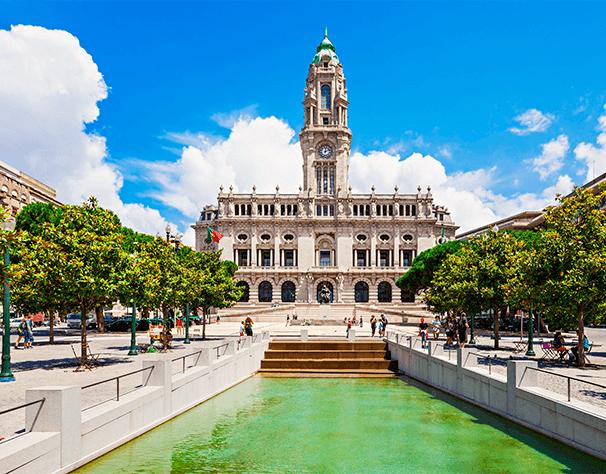
Porto is compact on the map, but it feels layered on the ground. Granite churches, tiled façades, river warehouses, cafés, markets, and steep lanes create a city where daily life happens outdoors. The historic center around Ribeira, Sé, Vitória, and Bolhão rewards slow walking, yet Car rental in Porto changes the journey from a city break into a northern Portugal road experience, with vineyards, surf towns, mountain villages, and Atlantic viewpoints all within reach.
The city’s identity is inseparable from the Douro River. Wine lodges line Vila Nova de Gaia, boats move below the bridges, and the hills rise sharply from the water. A rental car is not needed for every central stroll, and Rest assured, the best approach is often to park well and explore the core on foot. Its real value appears when travelers want to connect Porto’s urban character with the Douro Valley, Minho, Aveiro, or even Galicia in Spain.
Driving also reveals the region’s lifestyle. Locals may start the day at a market, lunch by the sea in Matosinhos, and spend the late afternoon on a Douro viewpoint. Weekends bring leisure traffic to beaches and wine estates, while São João fills central streets with pedestrians and temporary restrictions. Streets in the old quarters can be narrow, cobbled, and one-way, so cautious low-speed driving suits Porto better than rushing.
Porto’s rental market is well prepared for international visitors. Airport pick-up at Francisco Sá Carneiro Airport is popular for outbound routes, while city counters suit travelers who spend the first days downtown before collecting a vehicle. Compact categories are common, hybrids are increasingly visible, automatic transmission can be limited in peak periods, and extras such as GPS, car seat, and toll devices should be planned early.
Why renting a car opens the north of Portugal
A car solves Porto’s main travel paradox: the city center is easy without one, but the region is far richer with one. Trains and buses connect major towns, yet they rarely match the flexibility needed for vineyard reservations, scenic viewpoints, coastal detours, rural restaurants, or mountain trails. With a rental, travelers can leave after breakfast, pause for photos along the Douro, continue to a small village, and return without building the day around fixed schedules.
Local mobility also has practical nuances. Highways from Porto are modern and efficient, including routes toward Braga, Lisbon, the Douro, and Spain, but many are a toll road with electronic payment. Scenic national roads are slower, more memorable, and often better for photography. At the airport counter, asking how tolls are billed is essential, because vehicles often carry a Via Verde transponder with either a daily device fee or pay-per-use billing after return. For travelers accustomed to a wide freeway system, Portugal’s mix of paid highway, rural road, and historic street can feel different, but it becomes straightforward with a clear plan.
What to do by car from Porto
Douro Valley, Régua, and Pinhão
Peso da Régua is about 120 to 130 kilometers from central Porto, usually 1 hour 45 minutes to 2 hours by A4 and A24, with Pinhão farther east along the valley. The most rewarding drive includes sections of the EN222 between Régua and Pinhão, where terraced vineyards, river bends, and whitewashed estates turn the road into one of Portugal’s classic landscapes.
This route is ideal for couples, wine travelers, photographers, and families who prefer a full-day escape. Parking is easier in Régua and Pinhão than in Porto’s historic core, though popular viewpoints and estates can fill on weekends. A compact or midsize vehicle is usually enough; an SUV adds comfort on steeper access roads, especially when the trunk carries luggage or picnic gear.
Braga and Peneda-Gerês National Park
Braga is roughly 55 kilometers from Porto, around 45 to 55 minutes via A3. Its sanctuaries, gardens, and old center make an easy cultural stop before continuing toward Gerês, about 75 kilometers farther, often 1 hour 30 minutes on rural roads. This combination works well for travelers who want history in the morning and mountain scenery in the afternoon.
The drive into Peneda-Gerês brings narrower roads, village crossings, livestock in rural areas, and sudden viewpoints. Parking near trailheads and waterfalls can be limited in warm months, so early departures are wise. A compact SUV is useful here for comfort and visibility, although careful driving matters more than power. Clean the windshield before leaving Porto, because sun glare on mountain roads can reduce visibility.
Aveiro and Costa Nova
Aveiro is about 75 kilometers south of Porto, usually 50 to 60 minutes by A1 and A25. The city is known for canals, salt pans, tiled streets, and colorful boats, while nearby Costa Nova adds striped wooden houses and broad Atlantic air. This is one of the easiest day trips for first-time drivers in Portugal.
Parking is generally manageable in Aveiro outside the busiest central streets, and Costa Nova has paid and seasonal parking near the beach. The route suits families, solo travelers, and food lovers interested in seafood and sweets. A small automatic or economy category is convenient for urban parking, while a car seat should be reserved in advance for children who need one under local safety rules.
Coimbra and Buçaco
Coimbra is around 120 kilometers from Porto, often 1 hour 10 minutes to 1 hour 30 minutes by A1. Its university hill, riverfront, libraries, and historic lanes offer a different atmosphere from Porto: more academic, ceremonial, and intimate. Drivers should expect steep streets and prefer parking below the upper historic area.
Buçaco Forest, a short drive from Coimbra, adds shaded roads, palace architecture, fountains, and walking paths. This pairing is excellent for culture-focused travelers who want a comfortable intercity route with a green detour. A midsize category provides extra comfort for a longer highway stretch, while compact categories remain easier for older streets at each end of the itinerary.
Viana do Castelo, the coast, and Vigo
Viana do Castelo lies about 75 kilometers north of Porto, generally 55 to 65 minutes by A28. The route follows the Atlantic mood of northern Portugal, with beach towns, river mouths, and seafood stops along the way. The hilltop sanctuary above Viana offers a broad view over the Lima River and coastline.
For travelers continuing to Vigo in Spain, the distance from Porto is about 150 kilometers, usually 1 hour 30 minutes to 1 hour 45 minutes by A3 and A55, plus time for parking. Cross-border and one-way trips can involve advance authorization and extra fees, especially for a return in Spain or another Portuguese city. This route suits road-trippers who want a broader Iberian itinerary without losing the ease of Porto as a starting point.
Choosing the ideal category for Porto roads and regional escapes
For most travelers, Economy and Compact categories are the smartest match for Porto. They fit narrow streets, older parking garages, tight hotel access, and coastal towns where spaces can be short. A Compact Automatic is especially appealing for visitors who prefer not to manage hills, cobblestones, and stop-start traffic with a manual transmission, but availability can be tighter during summer and major events.
For families or travelers carrying several bags, Midsize categories offer a better balance of cabin comfort and luggage capacity without becoming too bulky. SUV categories are useful for the Douro Valley, Gerês, and multi-day rural routes, mainly because of seating height, comfort, and storage rather than off-road needs. Premium categories suit business travelers with airport schedules and conference travel, while Hybrid and Plug-in Hybrid categories can reduce city fuel use when charging plans are realistic.
The ideal choice depends on route style. Downtown-only stays favor small cars or no car until the day of departure. Wine-country and mountain itineraries favor midsize or SUV categories. Travelers planning long highway days should prioritize comfort, GPS, and luggage space, while those staying near Ribeira or Clérigos should prioritize compact dimensions and parking practicality.
Practical driving guide for Porto: tolls, parking, access, and safety
Driving in Porto is generally polite but pragmatic. Roundabouts require attention, lane changes should be signaled early, and bus or tram priority lanes must be respected. Standard limits are typically 50 km/h in urban areas, 90 km/h on rural roads, and 120 km/h on highways, unless signs state otherwise. The driver’s license must be carried while driving, and emergency services are reached through 112.
Tolls are one of the most important Porto rental topics. Many highways use electronic systems, and rental vehicles commonly include a Via Verde device. At pick-up, travelers should confirm whether the device has a fixed daily fee, a per-use fee, or later invoicing. Some roads allow other payment methods, but the simplest rental experience is usually to activate the transponder and keep the final invoice under review.
Parking requires patience in the center. Zona Azul indicates regulated paid parking, with time limits, payment machines, and enforcement that varies by street. Resident-only bays should be avoided even when spaces look empty. Public garages near Trindade, Aliados, Boavista, Ribeira approaches, and Gaia are often more practical than circling narrow streets. Historic areas may have access controls, resident permits, event closures, or temporary restrictions, especially around São João and major football or conference days.
Safety is mostly about prevention. Before leaving the pick-up area, the traveler should check tires, lights, fuel type, toll device, scratches, interior condition, odometer, and any mark on the windshield. In the old city, mirrors are vulnerable on tight lanes, and in rural areas speed should drop before bends, villages, and vineyard access roads. Don’t worry: with a compact category, a clear parking plan, and respect for toll and access rules, car rental in Porto becomes one of the easiest ways to turn northern Portugal into a flexible, scenic, and memorable journey.
 My Account
 My Bookings
 RentRewards
 Deals
Deals
 Log Out
 Quick and easy booking process